Categorical/categorical interactions
Data Analysis for Psychology in R 2
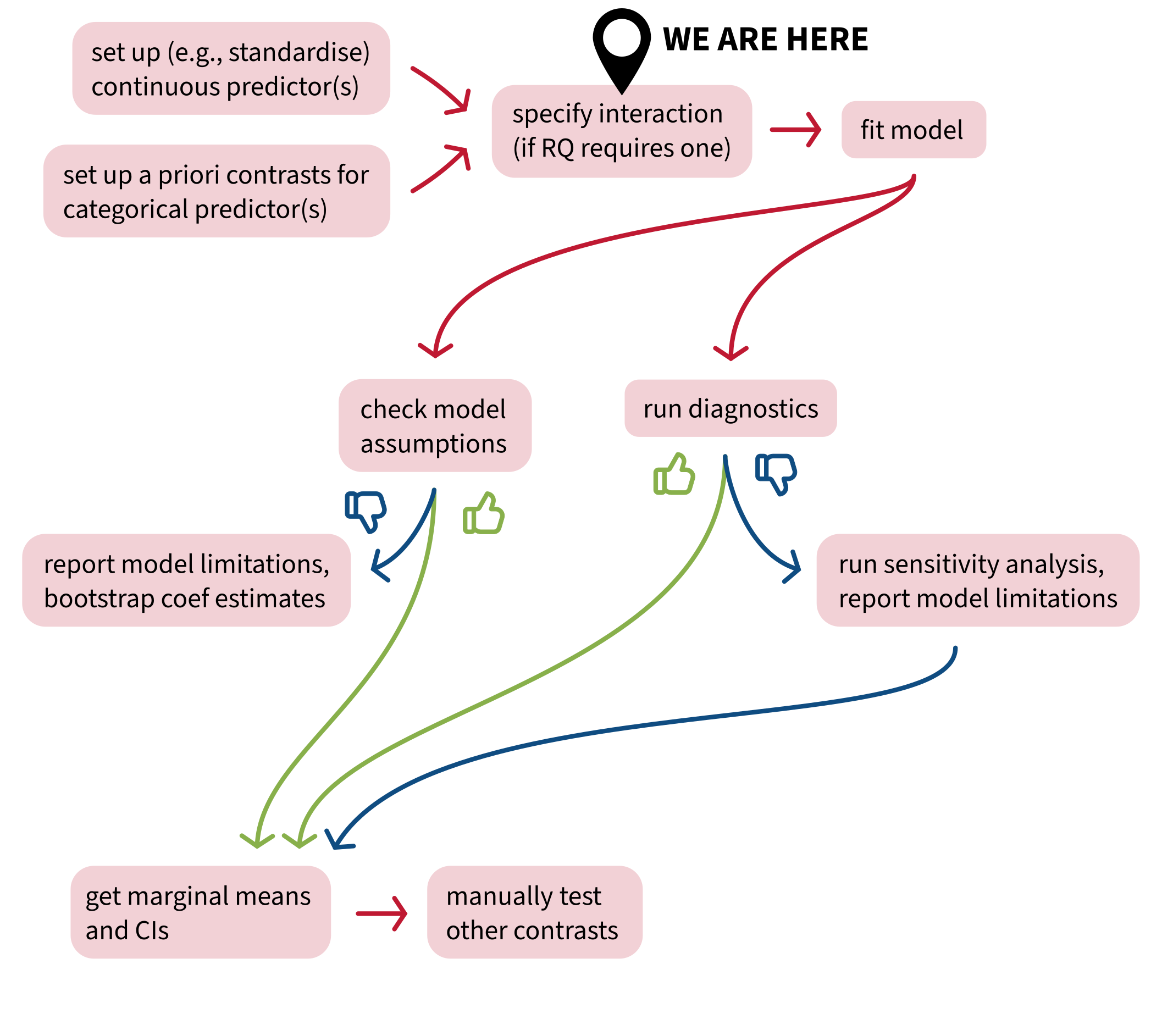
Where we are in the analysis plan today
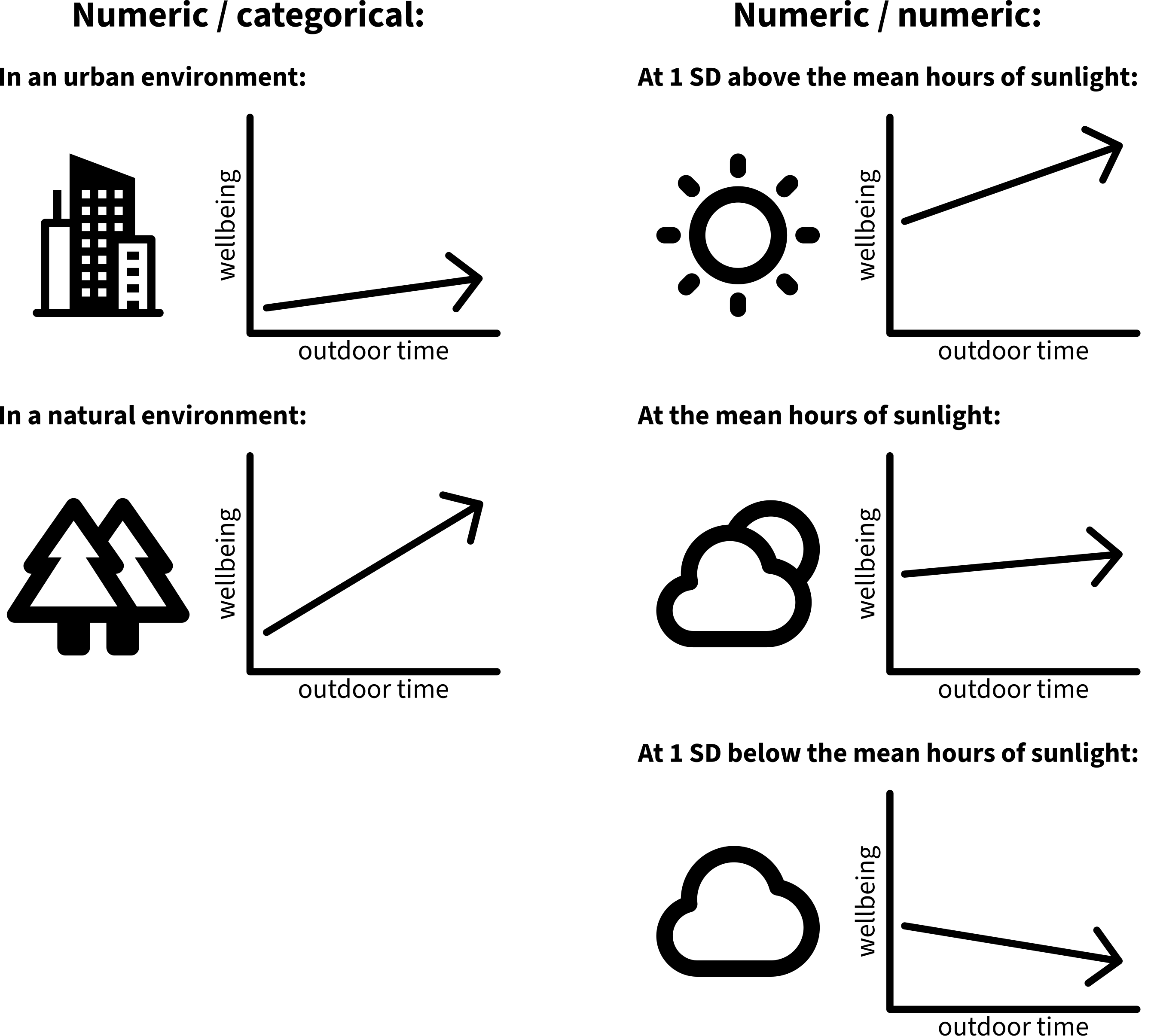
What’s an interaction again?
An interaction is how we allow a model to estimate that the association between one predictor and the outcome is different, depending on the value of another predictor.
Today’s data
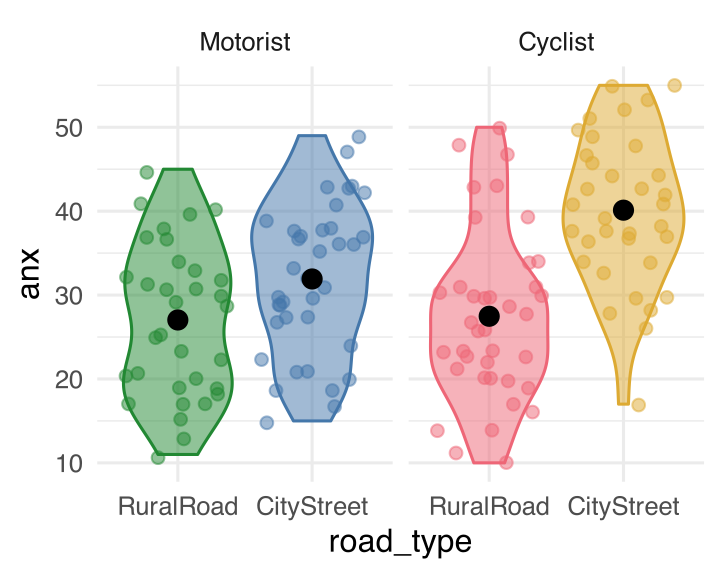
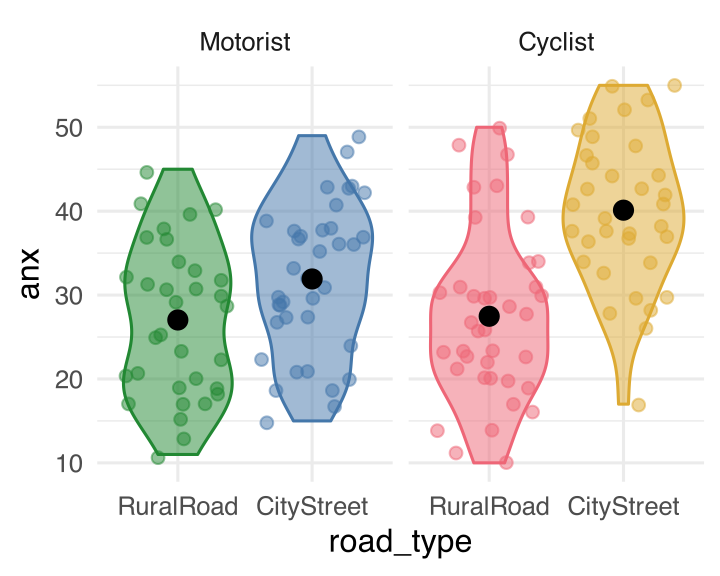
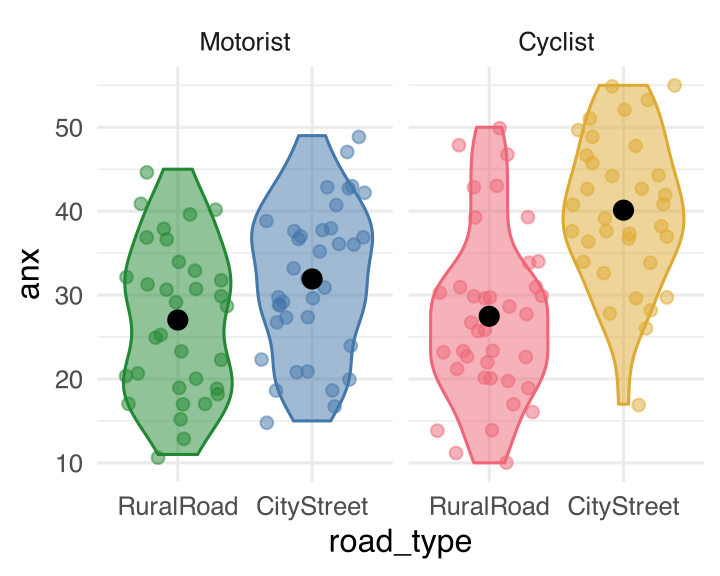
Post-travel anxiety ratings for people using two different kinds of transport:
Motorist:

Cyclist:

on two different road_types:
RuralRoad:

(all images from pixabay)
CityStreet:

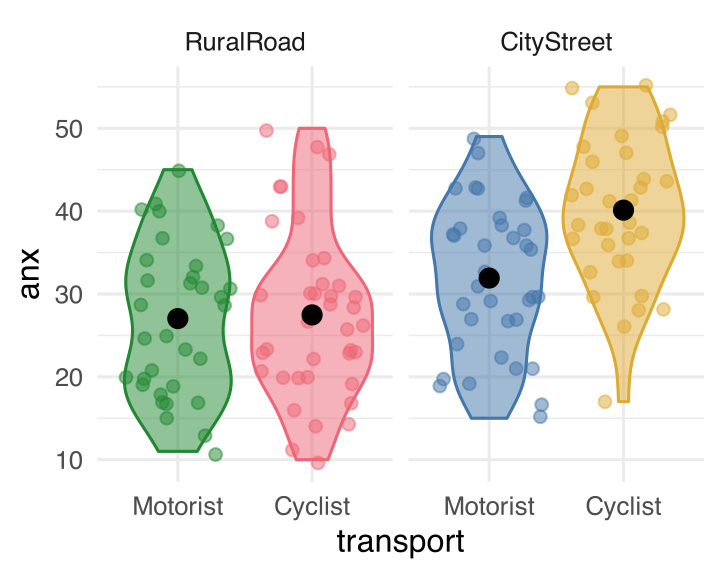
Today’s data: Another equivalent way
anx1 |>
  head(12)
# A tibble: 12 x 4
ppt_id anx transport road_type
<dbl> <dbl> <fct> <fct>
1 1 39 Cyclist RuralRoad
2 2 41 Cyclist CityStreet
3 3 38 Motorist RuralRoad
4 5 18 Motorist RuralRoad
5 7 25 Motorist RuralRoad
6 8 29 Motorist CityStreet
7 10 38 Cyclist CityStreet
8 12 11 Cyclist RuralRoad
9 13 33 Cyclist CityStreet
10 14 11 Motorist RuralRoad
11 15 40 Motorist RuralRoad
12 16 19 Motorist CityStreetDoes the difference in anxiety after travelling on different road types depend on the kind of transport?
Or, equivalently: Is the difference in anxiety between motorists and cyclists different after travelling on rural roads and on city streets?
Think–Pair–Share: Cat/cat interaction coefs
The interaction model anx ~ transport * road_type will have four coefficients:
Intercept(but you’re pretty good at interpreting the intercept by now, so we’ll spend time on the harder stuff!)transportCyclistroad_typeCityStreettransportCyclist:road_typeCityStreet
Without looking ahead, try to figure out: What will each coefficient represent?
- Think to yourself about each coefficient’s meaning. / Pair up with your neighbour and think together.

- Then share on
wooclap.com, enter codeGECHXE
Interpreting the model (1)
                                     Estimate Std. Error t value Pr(>|t|)
(Intercept)                             27.03       1.62   16.67     0.00
transportCyclist                         0.44       2.22    0.20     0.84
road_typeCityStreet                      4.89       2.23    2.19     0.03
transportCyclist:road_typeCityStreet     7.76       3.13    2.48     0.01
Intercept
- When
transport = 0 = Motoristandroad_type = 0 = RuralRoad, the estimated average anxiety is 27.03 points.
transportCyclist
- Specifically when
road_type = 0 = RuralRoad, being a cyclist is associated with an increase in anxiety of 0.44 points.
road_typeCityStreet
- Specifically when
transport = 0 = Motorist, being on city streets is associated with an increase in anxiety of 4.89 points.
Interpreting the model (2)
                                     Estimate Std. Error t value Pr(>|t|)
(Intercept)                             27.03       1.62   16.67     0.00
transportCyclist                         0.44       2.22    0.20     0.84
road_typeCityStreet                      4.89       2.23    2.19     0.03
transportCyclist:road_typeCityStreet     7.76       3.13    2.48     0.01
transportCyclist:road_typeCityStreet
- Being a cyclist changes the association of
road_typewithanxby 7.76 points. - So, the association of
road_typewithanxwhen …transport = 0 = Motoristis 4.89transport = 1 = Cyclistis 4.89 + 7.76 = 12.65
- Equivalently, being on city streets changes the association of
transportwithanxby 7.76 points. - So, the association of
transportwithanxwhen …road_type = 0 = RuralRoadis 0.44road_type = 1 = CityStreetis 0.44 + 7.76 = 8.2
Visualising the model’s estimates (1)
When we had continuous predictors, we used probe_interaction() from the interactions library.
Now that we have only categorical predictors, we must use cat_plot() instead.
cat_plot(
  m1,
  pred = transport,
  modx = road_type,
)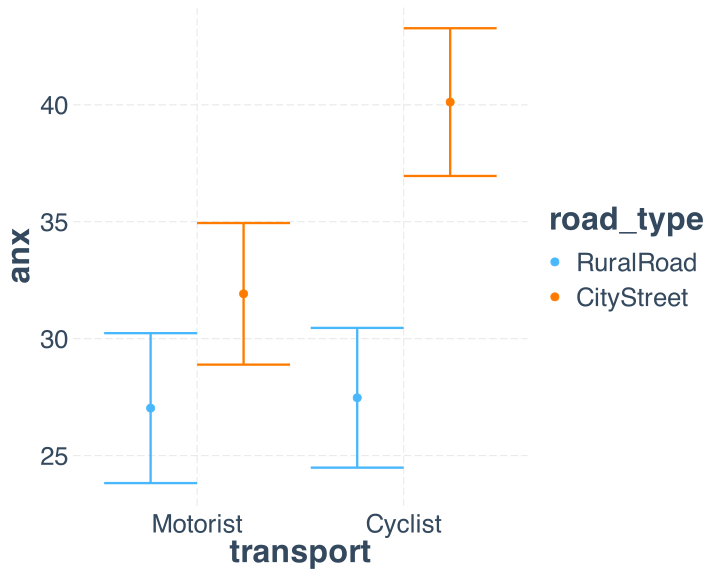
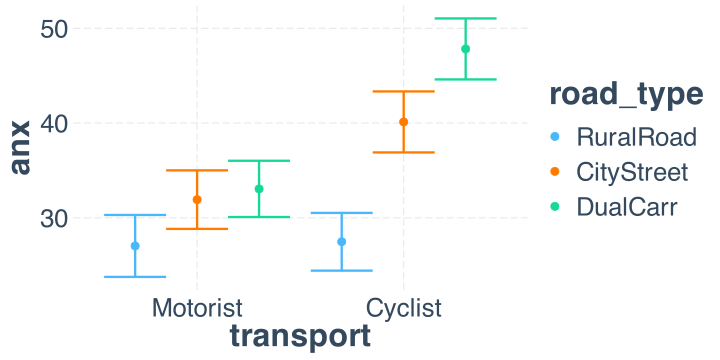
If you like to think about interactions in terms of differences in vertical distances between two groups, then this way of visualising things might work for you.
Visualising the model’s estimates (2)
cat_plot() can also link each group mean with lines, using the argument geom = "line".
cat_plot(
  m1,
  pred = transport,
  modx = road_type,
  geom = 'line'
)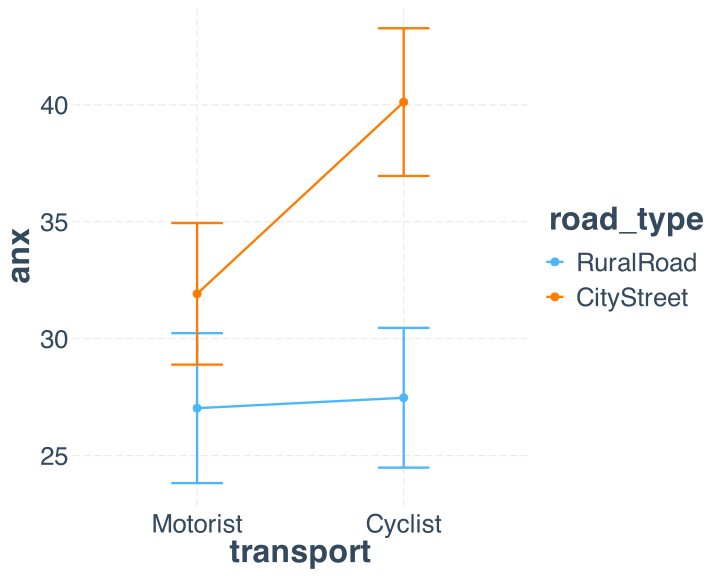
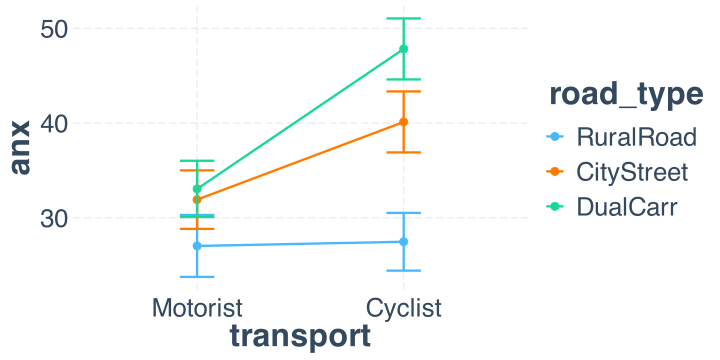
If you like to think about interactions in terms of differences of slopes between two groups, then this way of visualising things might work for you.
The simple effect of transport for rural roads
Rural roads are represented by road_type = 0, so we substitute 0 for \(\text{road_type}\).
\[\begin{align} \text{anx} &= 27.03 + (0.44 \cdot \text{transport}) + (4.89 \cdot \text{road_type}) + (7.76 \cdot \text{transport} \cdot \text{road_type}) + \epsilon \\ \text{anx}_{\text{Rural}} &= 27.03 + (0.44 \cdot \text{transport}) + (4.89 \cdot 0) + (7.76 \cdot \text{transport} \cdot 0) + \epsilon \\ \text{anx}_{\text{Rural}} &= 27.03 + (0.44 \cdot \text{transport}) + \epsilon \\ \end{align}\]
This is the equation for the blue line in this plot:
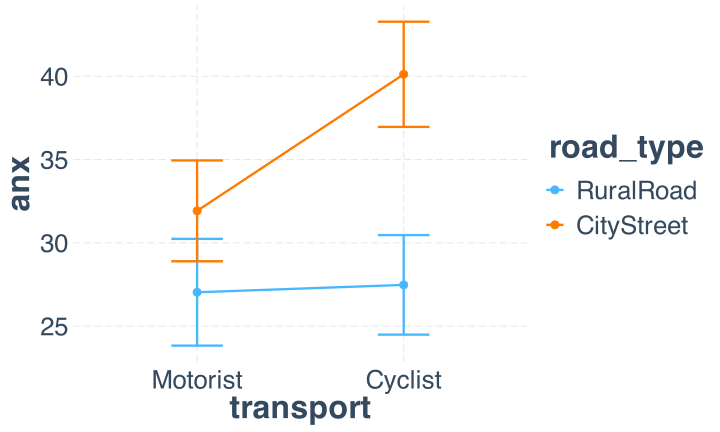
When we ask for a “simple effect”, we ask for the slope of this line: the difference between groups at a specific level of another predictor. So here, the simple effect is 0.44.
The simple effect of transport for city streets
City streets are represented by road_type = 1, so we substitute 1 for \(\text{road_type}\) below.
\[\begin{align} \text{anx} &= 27.03 + (0.44 \cdot \text{transport}) + (4.89 \cdot \text{road_type}) + (7.76 \cdot \text{transport} \cdot \text{road_type}) + \epsilon \\ \text{anx}_{\text{City}} &= 27.03 + (0.44 \cdot \text{transport}) + (4.89 \cdot 1) + (7.76 \cdot \text{transport} \cdot 1) + \epsilon \\ \text{anx}_{\text{City}} &= 27.03 + 4.89 + (0.44 \cdot \text{transport}) + (7.76 \cdot \text{transport}) + \epsilon \\ \text{anx}_{\text{City}} &= 31.92 + ((0.44 + 7.76) \cdot \text{transport}) + \epsilon \\ \text{anx}_{\text{City}} &= 31.92 + (8.2 \cdot \text{transport}) + \epsilon \\ \end{align}\]
This is the equation for the orange line in this plot:
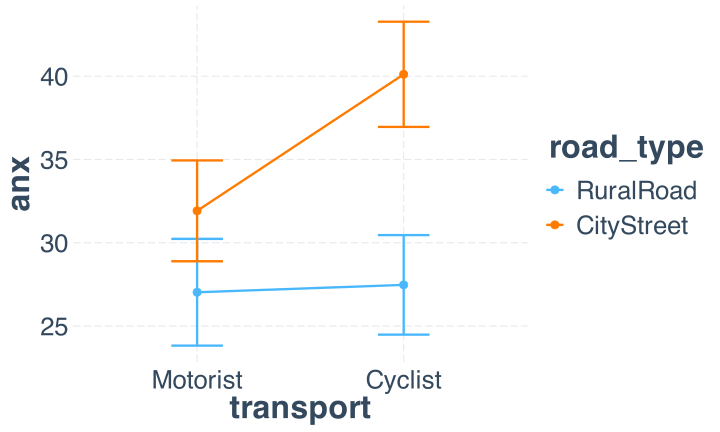
If we ask for the simple effect of transport for city streets, it’s the slope of this line: 8.2.
What about simple effects of road_type?
Also doable! Those would be the symmetrical simple effects: also true, just a different angle of looking at the same data.
Those simple effects would match the blue and orange slopes in this plot:
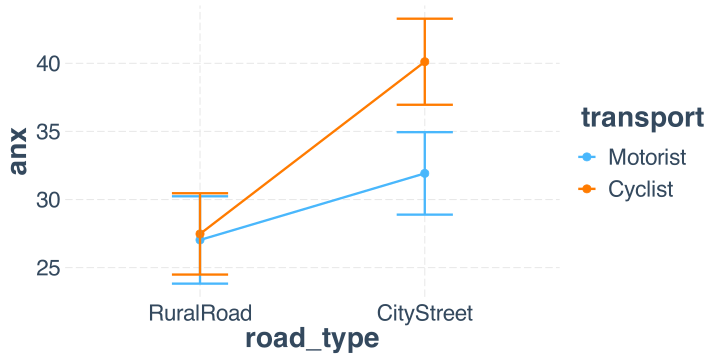
I’ll leave calculating those lines to you—it’s good practice :)
Interactions with 2x3 data, treatment-coded
Post-travel anxiety ratings for people using two different kinds of transport:
Motorist:
Cyclist:
now on three different road_types:
RuralRoad:
CityStreet:
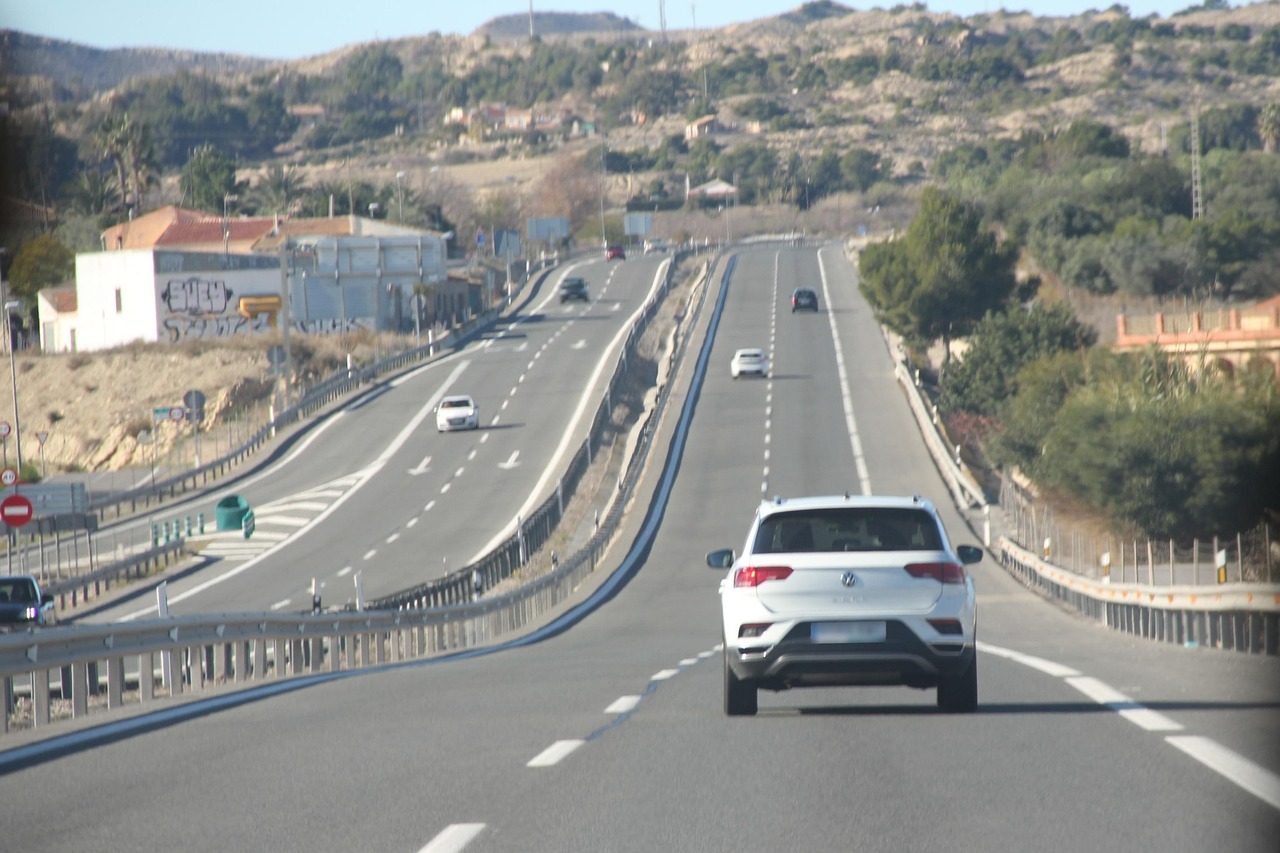
DualCarr(iageway):
Visualise the data
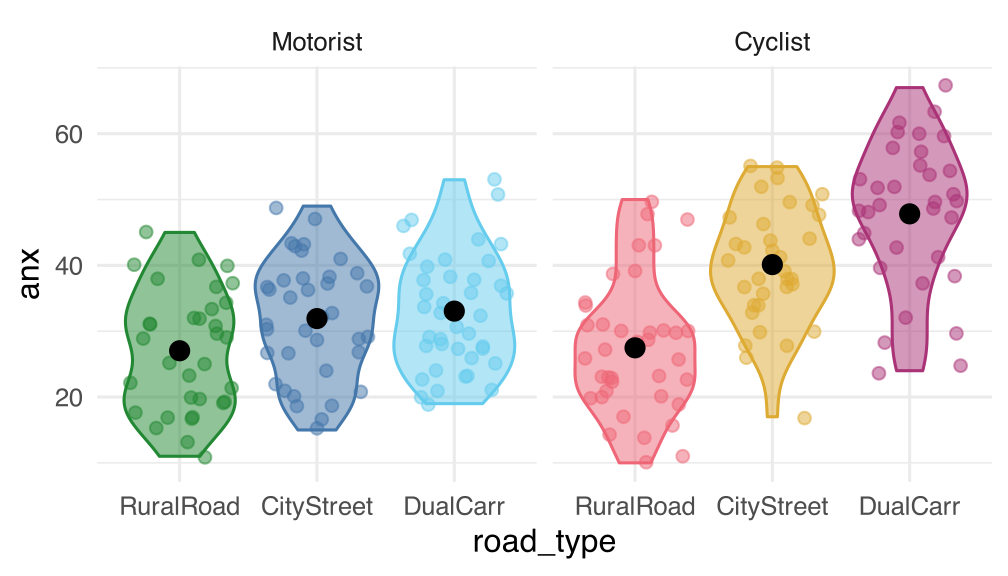
The data is exactly the same as before, plus the new category of DualCarr.
Interpreting the model (1)
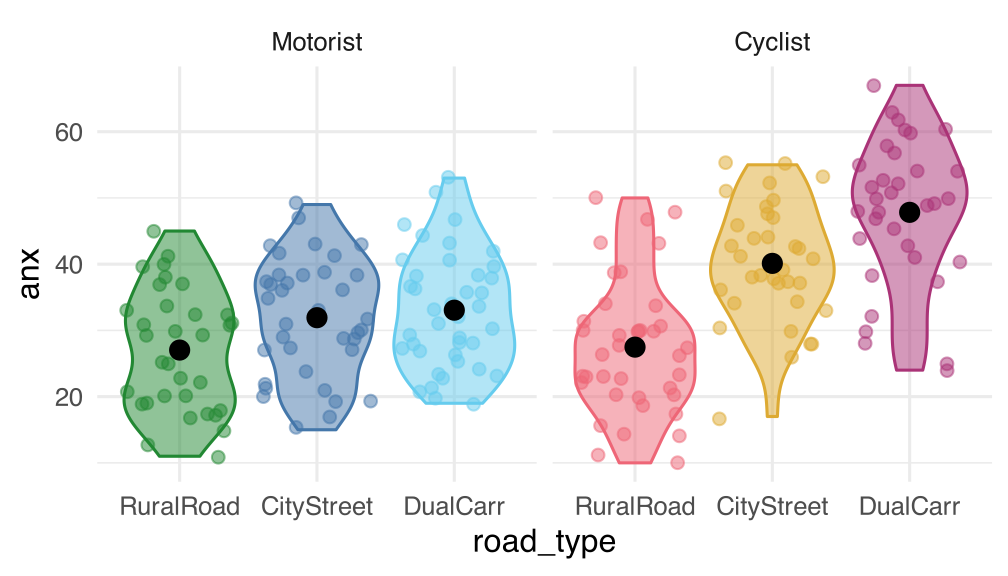
                                      Estimate
(Intercept)                              27.03
transportCyclist                          0.44
road_typeCityStreet                       4.89
road_typeDualCarr                         6.02
transportCyclist:road_typeCityStreet      7.76
transportCyclist:road_typeDualCarr       14.33
Intercept (same as before)
- For Motorists on RuralRoads (i.e., at the reference levels of
transportandroad_type, where all predictors = 0), the estimated averageanxis 27.03 points.
transportCyclist (same as before)
- Specifically at the reference level of
road_type(RuralRoad), being a cyclist is associated with an increase in anxiety of 0.44 points.
road_typeCityStreet (same as before)
- Specifically at the reference level of
transport(Motorist), being on city streets is associated with an increase in anxiety of 4.89 points.
road_typeDualCarr (new!)
- Specifically at the reference level of
transport(Motorist), being on dual carriageways is associated with an increase in anxiety of 6.02 points.
Interpreting the model (2)
                                      Estimate
(Intercept)                              27.03
transportCyclist                          0.44
road_typeCityStreet                       4.89
road_typeDualCarr                         6.02
transportCyclist:road_typeCityStreet      7.76
transportCyclist:road_typeDualCarr       14.33
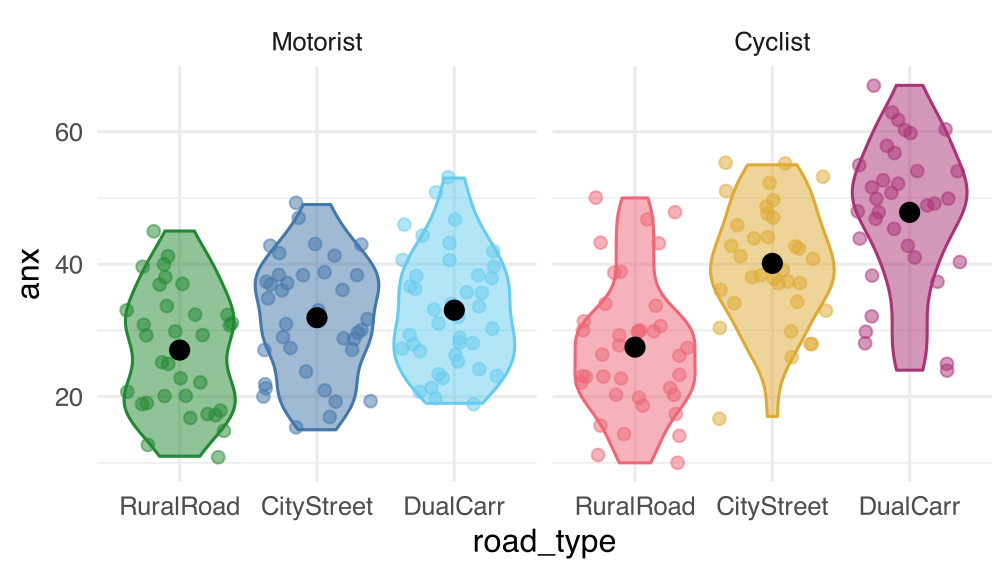
transportCyclist:road_typeCityStreet
- Being a cyclist changes the association of
road_typeCityStreetwithanxby 7.76 points. - So, the association of
road_typeCityStreetwithanxwhen …transport = 0 = Motoristis 4.89transport = 1 = Cyclistis 4.89 + 7.76 = 12.65
- Equivalently, being on city streets changes the association of
transportwithanxby 7.76 points. - So, the association of
transportwithanxwhen …road_typeCityStreet = 0 = RuralRoadis 0.44road_typeCityStreet = 1 = CityStreetis 0.44 + 7.76 = 8.2
Interpreting the model (3)
                                      Estimate
(Intercept)                              27.03
transportCyclist                          0.44
road_typeCityStreet                       4.89
road_typeDualCarr                         6.02
transportCyclist:road_typeCityStreet      7.76
transportCyclist:road_typeDualCarr       14.33
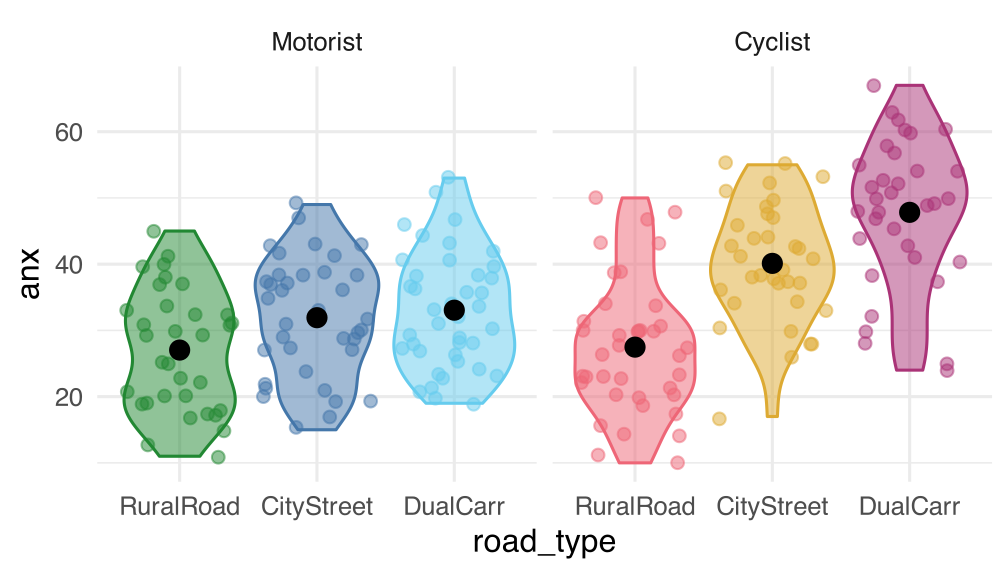
transportCyclist:road_typeDualCarr
- Being a cyclist changes the association of
road_typeDualCarrwithanxby about 14.33 points. - So, the association of
road_type DualCarrwithanxwhen …transport = 0 = Motoristis 6.02transport = 1 = Cyclistis 6.02 + 14.33 = 20.35
- Equivalently, being on dual carriageways changes the association of
transportwithanxby 14.33 points. - So, the association of
transportwithanxwhen …road_typeDualCarr = 0 = RuralRoadis 0.44road_typeDualCarr = 1 = DualCarris 0.44 + 14.33 = 14.77
Visualising the model’s estimates with cat_plot()
One option:
cat_plot(
  m2,
  pred = transport,
  modx = road_type,
)
Another option:
cat_plot(
  m2,
  pred = transport,
  modx = road_type,
  geom = 'line'
)
The big picture: Interactions
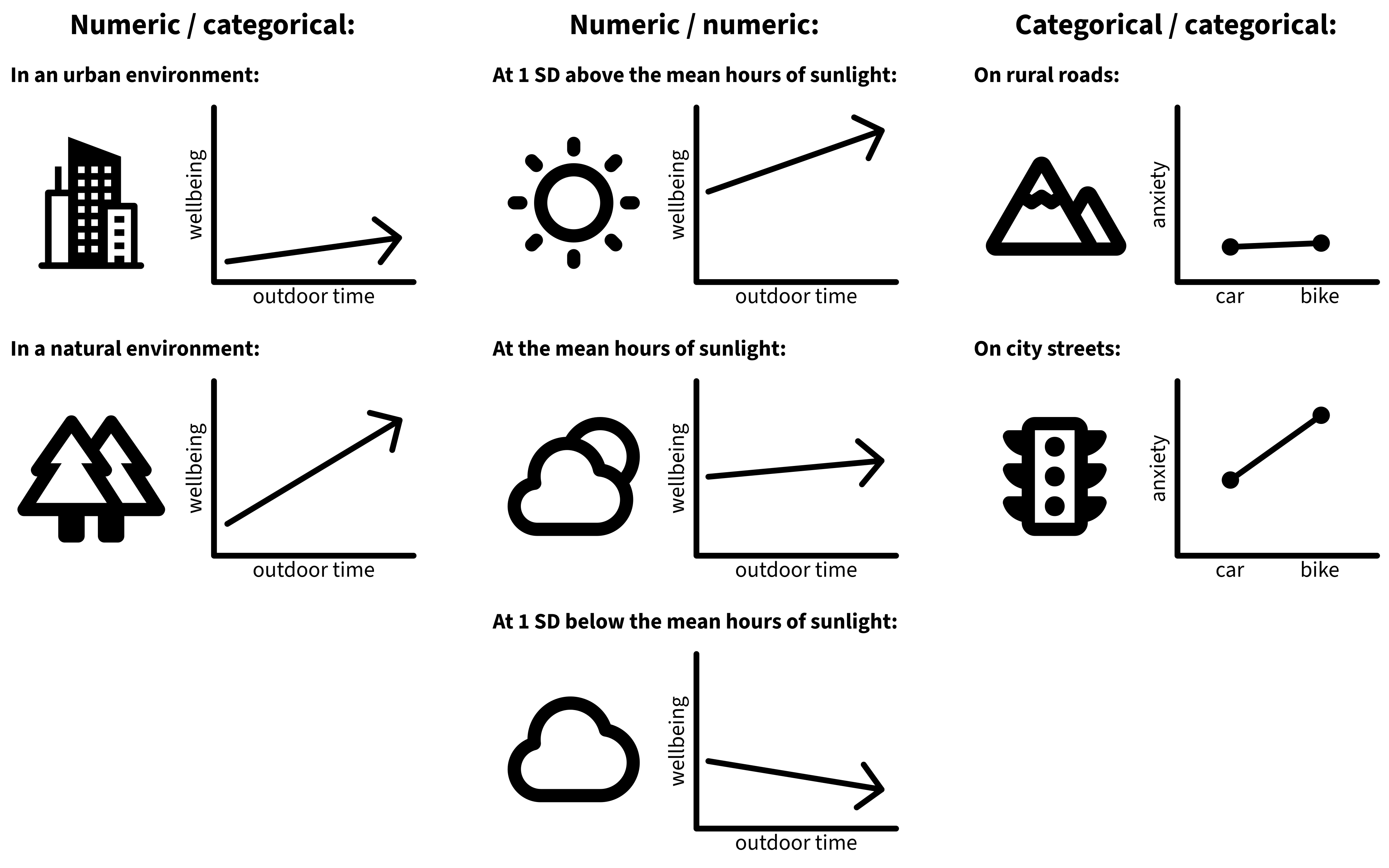
Whenever one predictor’s association with the outcome depends on another predictor, then we’re dealing with interactions.
Beyond two-way interactions
So far, we’ve been focusing on interactions between two predictors, called “two-way interactions”.
But in principle, we could throw another variable into the mix:
Maybe countries with different amounts of bike infrastructure differ in the anxiety that cyclists vs. motorists feel on different road types.

This would be a three-way interaction between country, transport, and road type.
My advice to you: Try not to design studies that involve three-way interactions.
- They are tricky to interpret.
- The three-way interaction term itself is often a fairly small number, and we usually don’t have enough statistical power to reliably detect it.
This week
Tasks:

Attend your lab and work together on the exercises
Support:

Help each other on the Piazza forum

Complete the weekly quiz

Attend office hours (see Learn page for details)
Key insight: The difference between differences is the same both ways
One way:
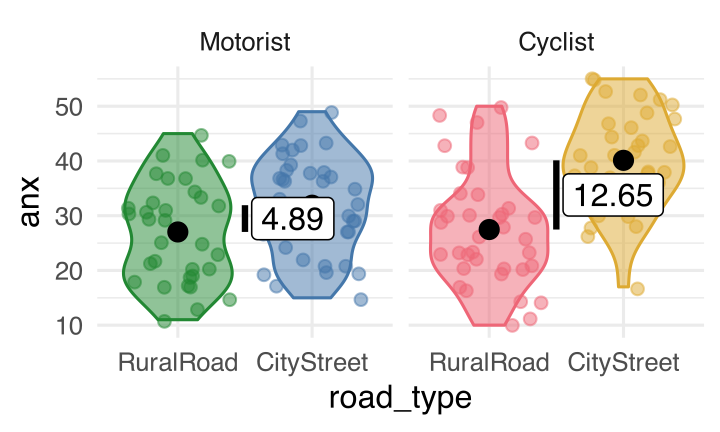
\[ 12.65 - 4.89 = 7.76 \]
Another way:
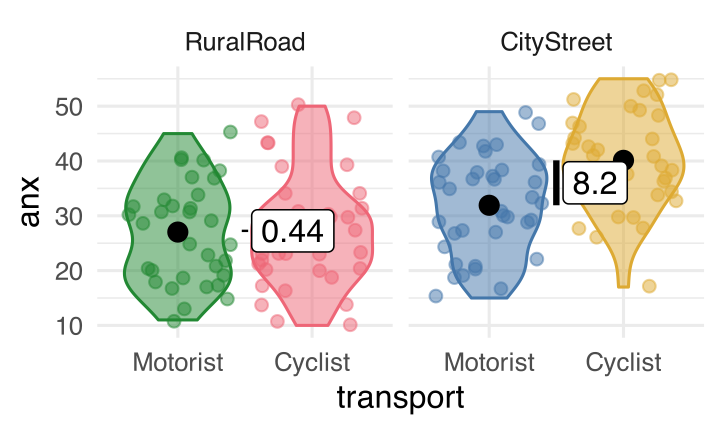
\[ 8.2 - 0.44 = 7.76 \]
No matter which angle we look at the interaction data from, the difference between differences—which appears in the model as the coefficient of the interaction term—is the same.
As we saw last week: interactions are symmetrical.
(In practice, people usually only report the angle that makes the most sense for their research question.)
Difference of differences 1
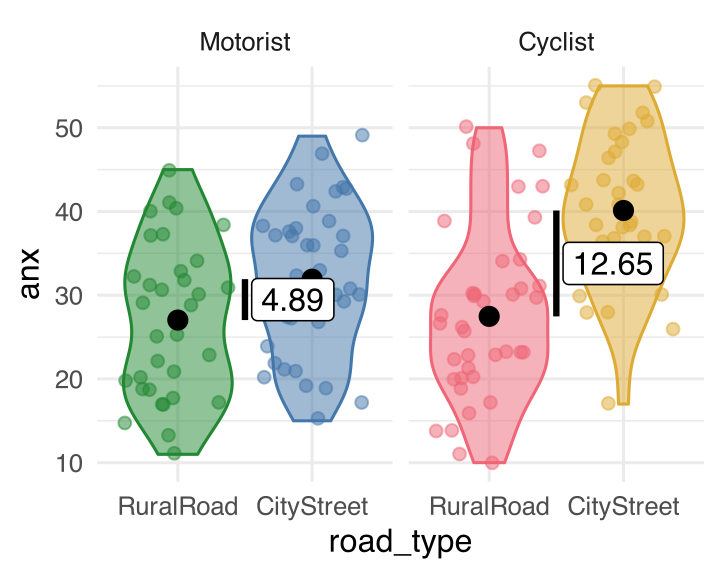
(Motorist and RuralRoad are the reference levels)
Group means:
| RuralRoad | CityStreet | |
|---|---|---|
| Motorist | 27.03 | 31.92 |
| Cyclist | 27.47 | 40.12 |
For motorists, the difference between city and rural:
\[ \begin{align} & \text{CityStreet}~ - \text{RuralRoad} \\ =~ & 31.92 - 27.03 \\ =~ & 4.89 \\ \end{align} \]
For cyclists, the difference between city and rural:
\[ \begin{align} & \text{CityStreet}~ - \text{RuralRoad} \\ =~ & 40.12 - 27.47 \\ =~ & 12.65 \\ \end{align} \]
The difference between cyclists’ difference and motorists’ difference:
\[ \begin{align} & \text{CyclistDiff}~ - \text{MotoristDiff} \\ =~ & 12.65 - 4.89 \\ =~ & 7.76 \\ \end{align} \]
Difference of differences 2
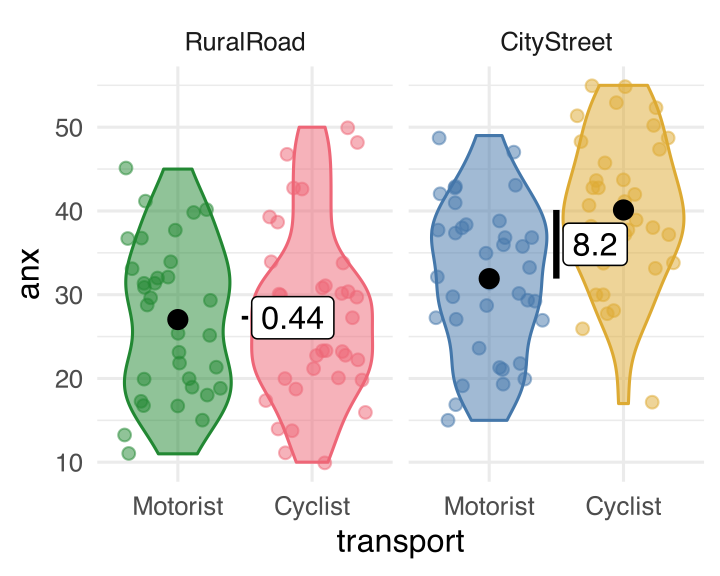
(Motorist and RuralRoad are the reference levels)
Group means:
| RuralRoad | CityStreet | |
|---|---|---|
| Motorist | 27.03 | 31.92 |
| Cyclist | 27.47 | 40.12 |
For rural roads, the difference between cyclists and motorists:
\[ \begin{align} & \text{Cyclist}~ - \text{Motorist} \\ =~ & 27.47 - 27.03 \\ =~ & 0.44 \\ \end{align} \]
For city streets, the difference between cyclists and motorists:
\[ \begin{align} & \text{Cyclist}~ - \text{Motorist} \\ =~ & 40.12 - 31.92 \\ =~ & 8.2 \\ \end{align} \]
The difference between city streets’ difference and rural roads’ difference:
\[ \begin{align} & \text{CityStreetsDiff}~ - \text{RuralRoadsDiff} \\ =~ & 8.2 - 0.44 \\ =~ & 7.76 \\ \end{align} \]