Numeric/numeric interactions
Data Analysis for Psychology in R 2
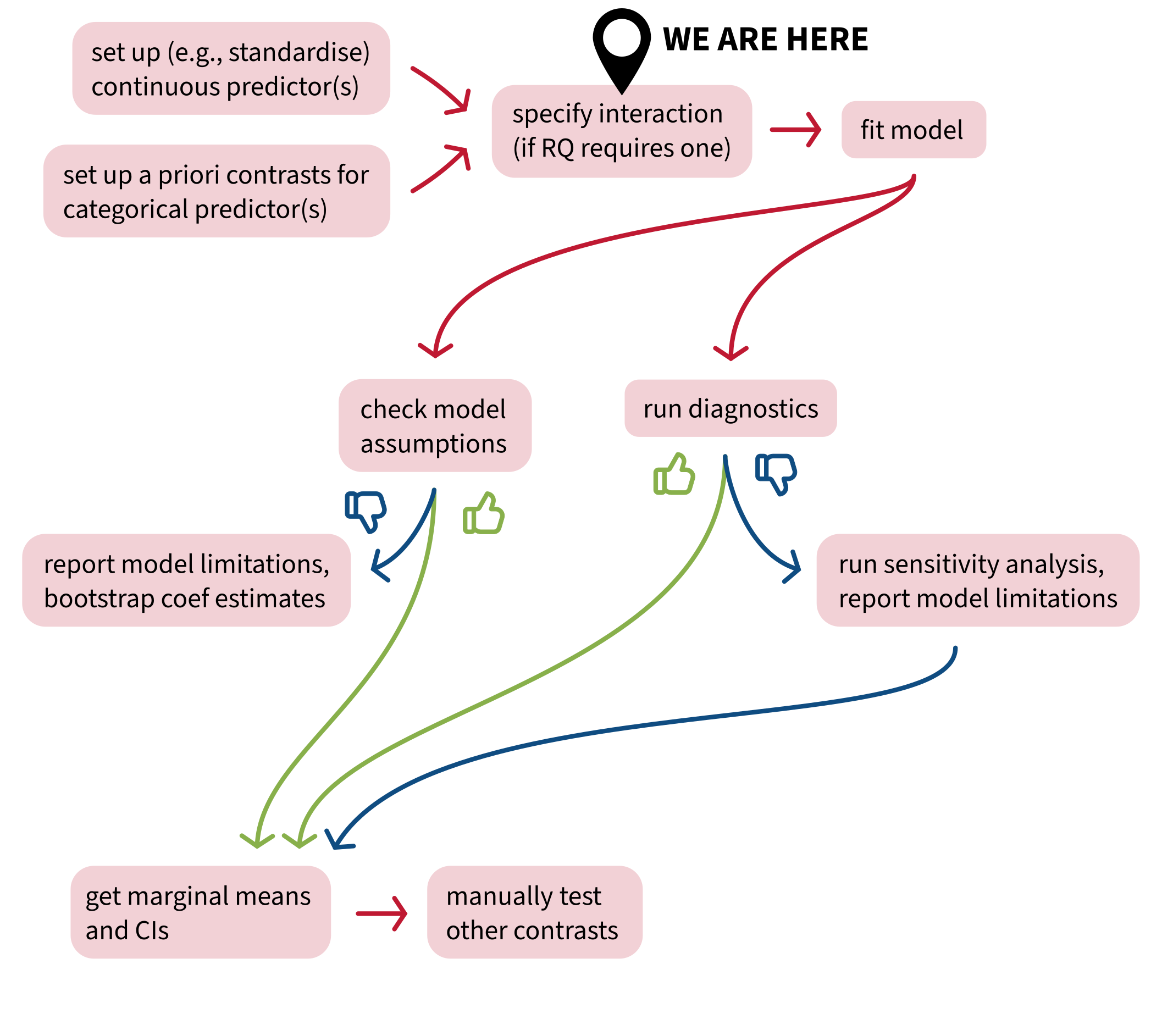
Where we are in the analysis plan today
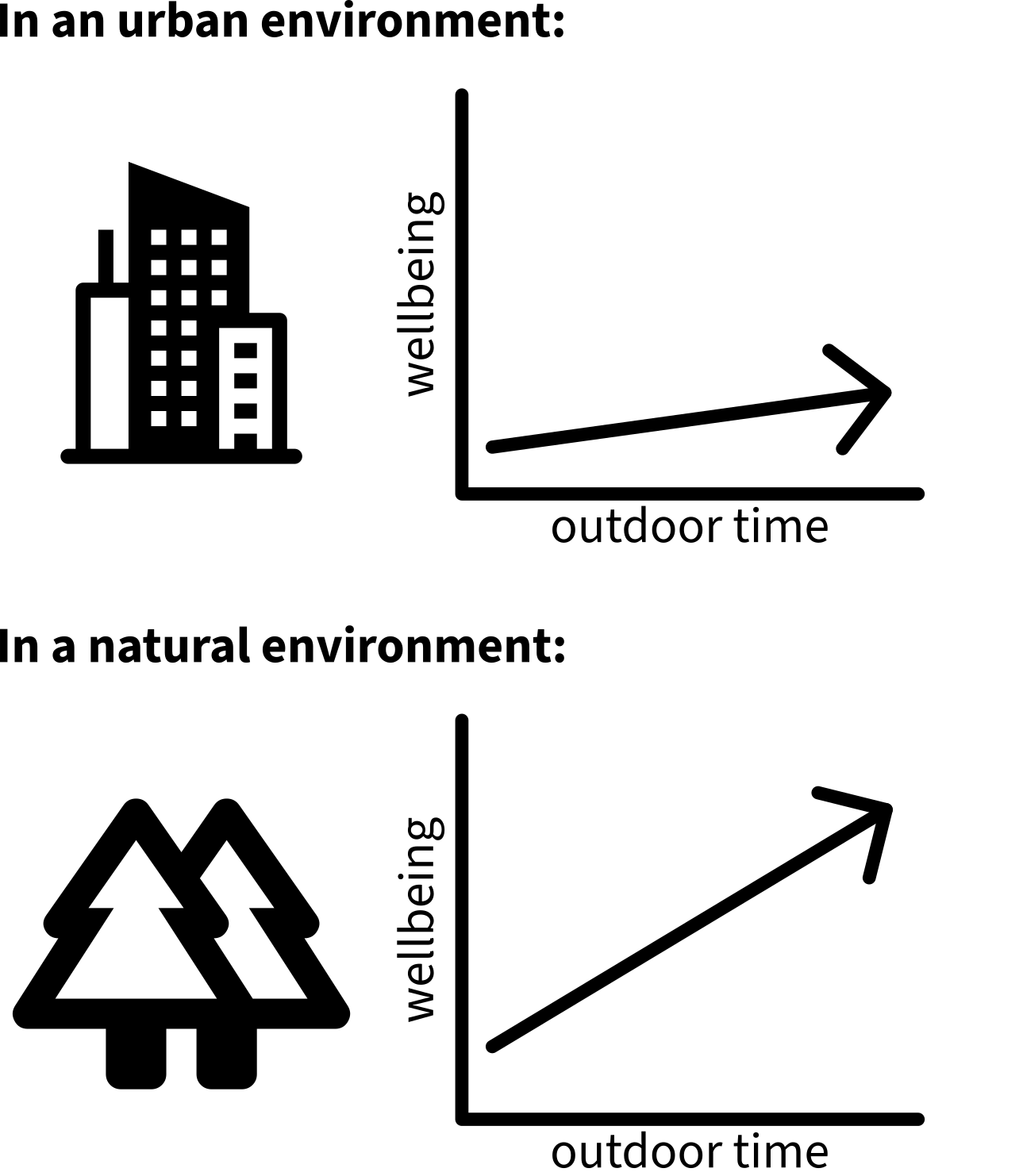
What’s an interaction again?
An interaction is how we allow a model to estimate that the association between one predictor and the outcome is different, depending on the value of another predictor.
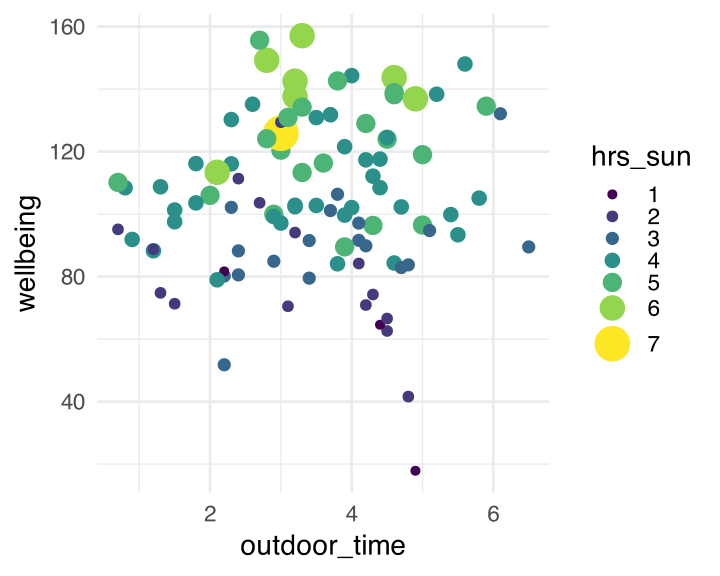
A plot to make interaction more obvious
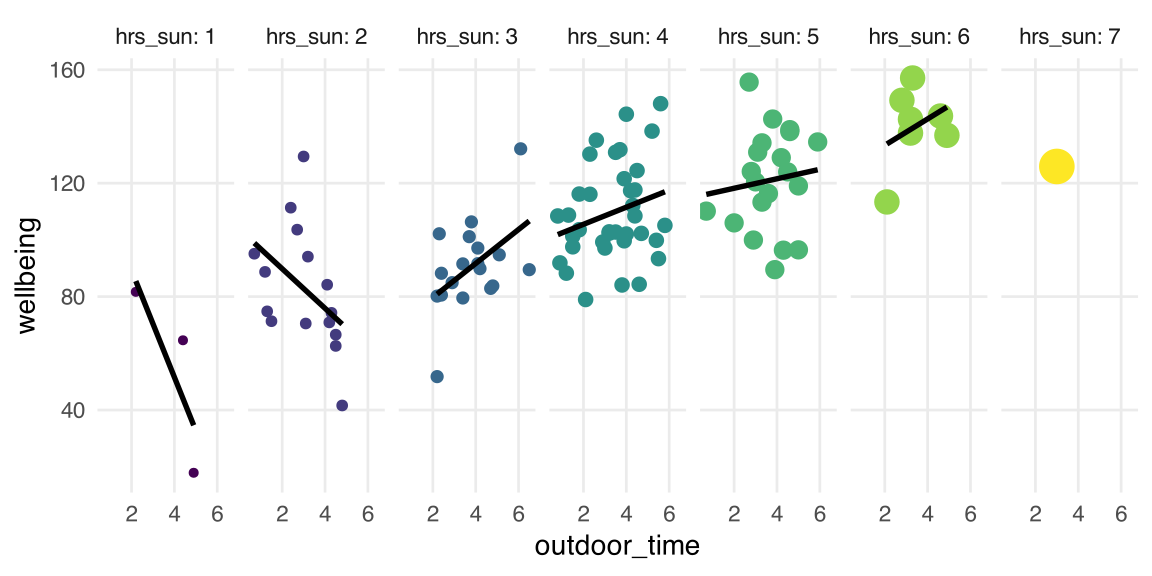
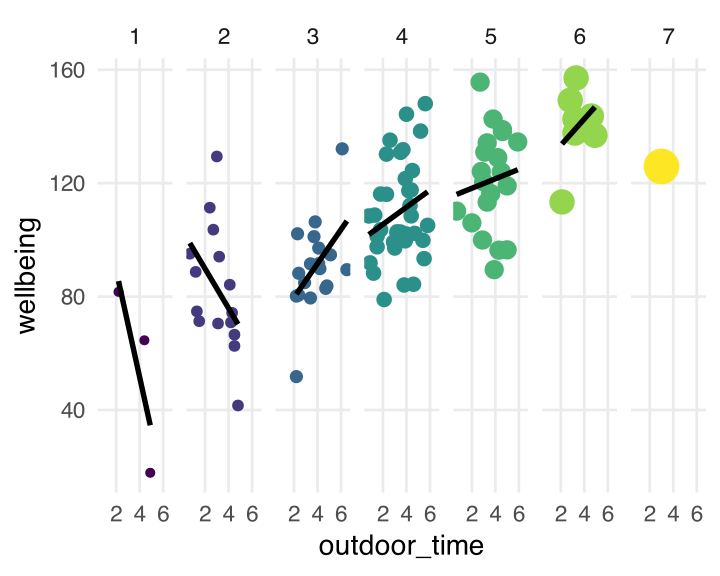
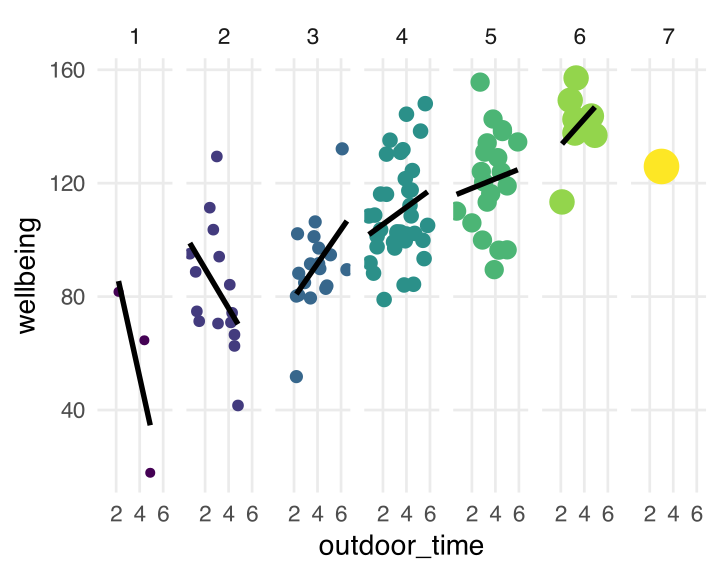
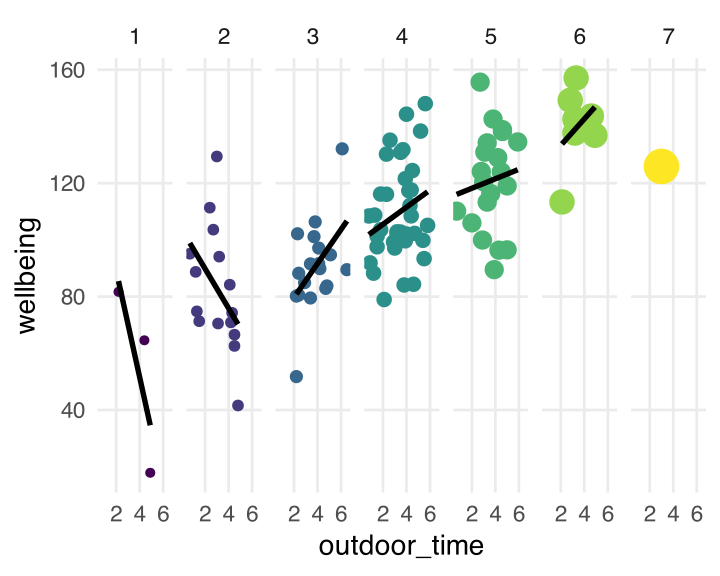
Different slopes in different panels \(\rightarrow\) The association between outdoor time and wellbeing appears different for different amounts of sunlight.
 Retrieval practice: Specifying the interaction model
wooclap.com, enter code BIAHTI
Interpreting the model (1)
                     Estimate Std. Error t value Pr(>|t|)
 (Intercept)            87.920     16.376   5.369 5.51e-07 ***
 outdoor_time          -10.944      4.538  -2.412  0.01779 *
 hrs_sun                 3.154      4.311   0.732  0.46614
 outdoor_time:hrs_sun    3.255      1.193   2.728  0.00758 **
Intercept
- When
outdoor_time = 0hours outdoors andhrs_sun = 0sunlight hours, the estimated averagewellbeingis 87.9.
outdoor_time
- Specifically when
hrs_sun = 0sunlight hours, spending an additional hour outdoors is associated with a decrease in wellbeing of 10.9 points.
hrs_sun
- Specifically when
outdoor_time = 0hours spent outdoors, the sun shining for an extra hour is associated with an increase in wellbeing of 3.2 points.
Interpreting the model (2)
                     Estimate Std. Error t value Pr(>|t|)
 (Intercept)            87.920     16.376   5.369 5.51e-07 ***
 outdoor_time          -10.944      4.538  -2.412  0.01779 *
 hrs_sun                 3.154      4.311   0.732  0.46614
 outdoor_time:hrs_sun    3.255      1.193   2.728  0.00758 **
outdoor_time:hrs_sun
Increasing sunlight hours by 1 changes the association of
outdoor_timewithwellbeingby 3.3.So, the association of
outdoor_timewithwellbeingwhen …hrs_sun = 0is –10.9hrs_sun = 1is –10.9 + 3.3 = –7.6hrs_sun = 2is –10.9 + 3.3 + 3.3 = –4.3- …
But wait! There’s another way to interpret the interaction term
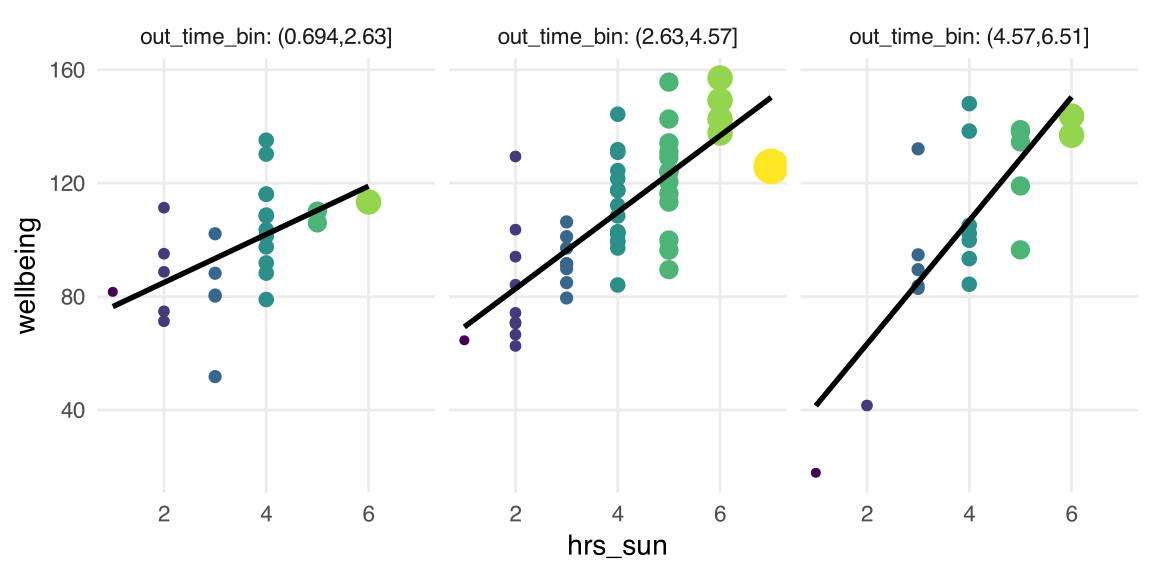
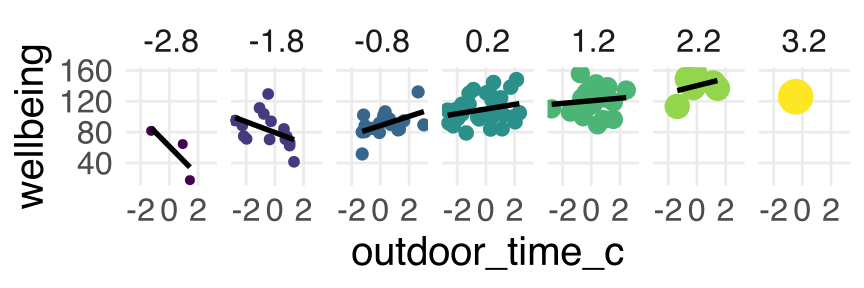
Now the x axis shows hours of sunlight, and each panel shows a group of similar outdoor_times.
This plot shows that the association between sunlight hours and wellbeing is different, when different amounts of time are spent outdoors. The interacting variables are flipped, but the interaction is still there.
Both ways of interpreting the interaction term
Interpretation 1:
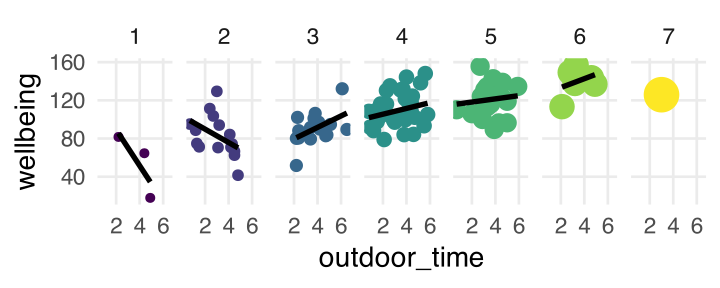
Increasing hrs_sun by 1 means that the association between outdoor_time and wellbeing changes by about 3.
Interpretation 2 flips the two interacting variables and is still true:
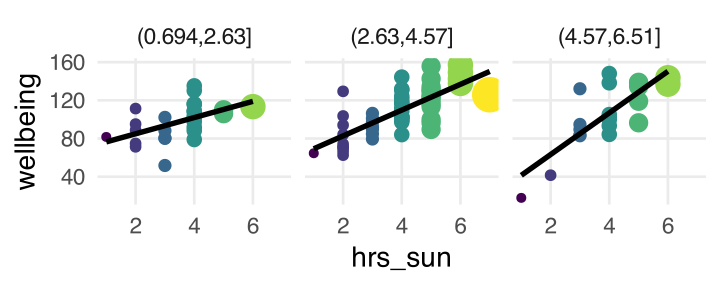
Increasing outdoor_time by 1 means that the association between sun_hrs and wellbeing changes by about 3.
Interactions are symmetrical
A common example of symmetry: When a shape looks the same, even when it is mirrored.
.png)
Image from Wikimedia Commons
If we have an interaction between predictors A and B, then both “mirror images” are always true:
- The association between A and the outcome is different for different values of B.
- The association between B and the outcome is different for different values of A.
So we say that interactions are symmetrical.
In practice, usually we choose the interpretation that’s narratively simpler or makes more intuitive sense (like I secretly did last week!)
Back to interpreting the interaction term
                     Estimate Std. Error t value Pr(>|t|)
 (Intercept)            87.920     16.376   5.369 5.51e-07 ***
 outdoor_time          -10.944      4.538  -2.412  0.01779 *
 hrs_sun                 3.154      4.311   0.732  0.46614
 outdoor_time:hrs_sun    3.255      1.193   2.728  0.00758 **
outdoor_time:hrs_sun
Increasing sunlight hours by 1 changes the association of
outdoor_timewithwellbeingby 3.3.So, the association of
outdoor_timewithwellbeingwhen …hrs_sun = 0is –10.9hrs_sun = 1is –10.9 + 3.3 = –7.6hrs_sun = 2is –10.9 + 3.3 + 3.3 = –4.3- …
Equivalently: Increasing outdoor time by 1 changes the association of
hrs_sunwithwellbeingby 3.3.So, the association of
hrs_sunwithwellbeingwhen …outd_time = 0is 3.2outd_time = 1is 3.2 + 3.3 = 6.5outd_time = 2is 3.2 + 3.3 + 3.3 = 9.8- …
Simple slopes
One of the best ways to understand an interaction is to figure out what the model thinks the values of these different slopes are:
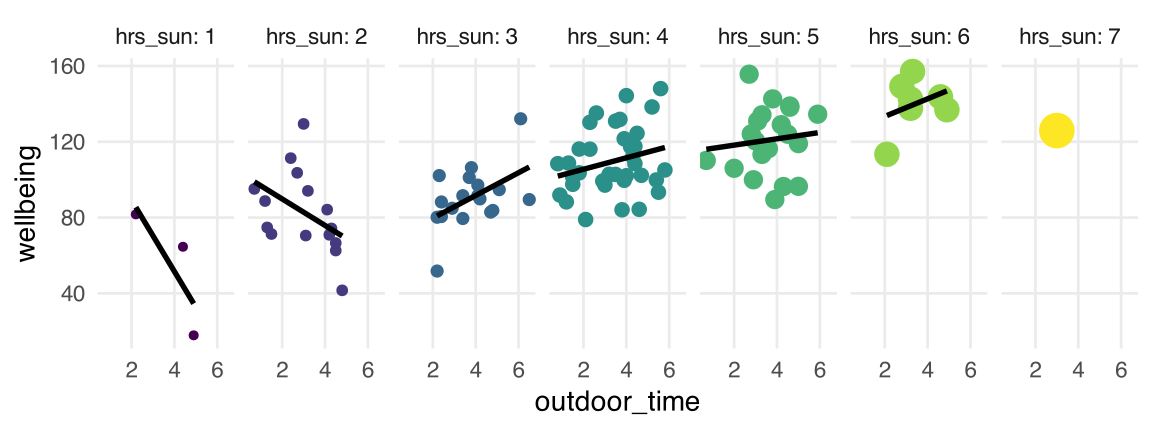
Specifically, we want to know the slopes of the associations that the model estimates between outdoor_time and wellbeing for particular values of hrs_sun. We call these simple slopes.
A simple slope is the slope of the association between one predictor and the outcome, at a specific value of another predictor.
I’ve been showing you simple slopes when interpreting interaction coefficients. But now let’s calculate them formally!
What we need to know:
- The model’s linear expression
- The values of each \(\beta\) coefficient
Plotting simple slopes in R
library(interactions)

probe_interaction(
  m1,
  pred = outdoor_time,
  modx = hrs_sun,
  interval = T
)$interactplot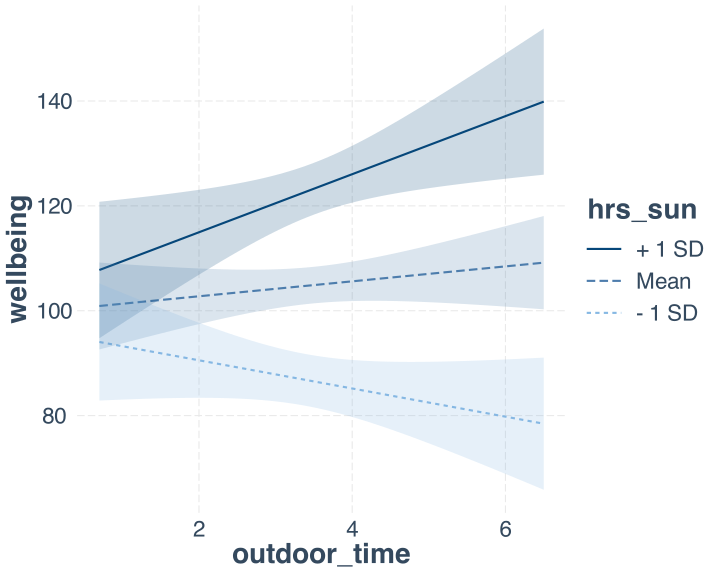
The Johnson-Neyman interval
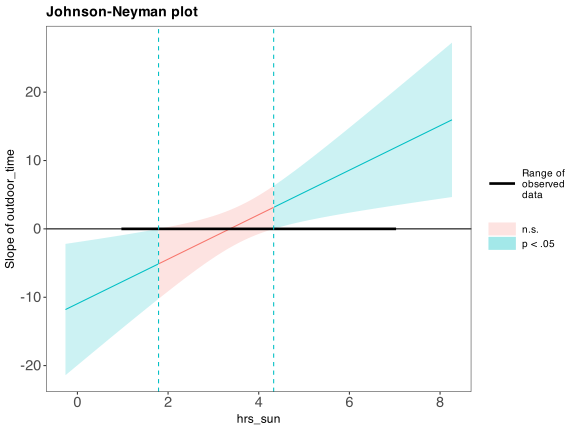
The JN interval tells us the values for one predictor when the simple slope of the other predictor is significantly different from zero. (This is also called a region of significance analysis.)
JOHNSON-NEYMAN INTERVAL

 When hrs_sun is OUTSIDE the interval [1.79, 4.33], the slope of
 outdoor_time is p < .05.

 Note: The range of observed values of hrs_sun is [1.00, 7.00]
To plot the JN interval:
probe_interaction(
  m1,
  pred = outdoor_time,
  modx = hrs_sun,
  jnplot = T
)$simslopes$jnplot- x:
hrs_sun - y: Slope of
outdoor_time - Red area: Slope of
outdoor_timenot significantly diff. from zero - Blue area: Slope of
outdoor_timeis significantly diff. from zero
Retrieval practice: Mean-centering
wooclap.com, enter code BIAHTI
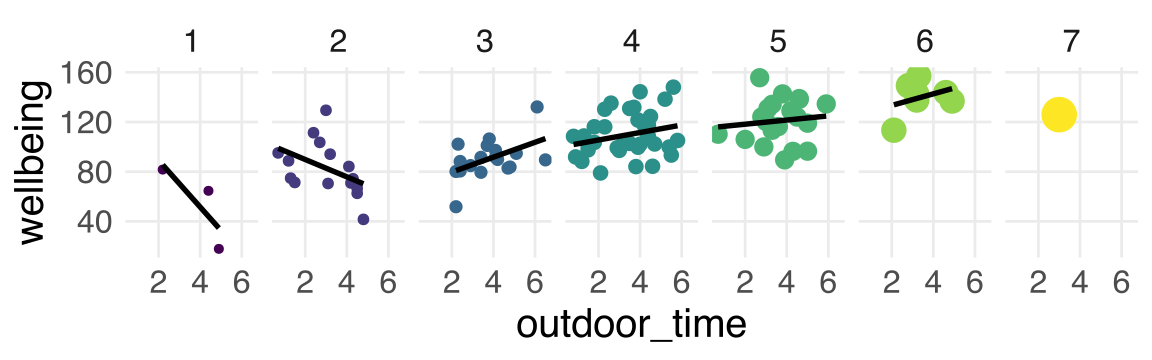
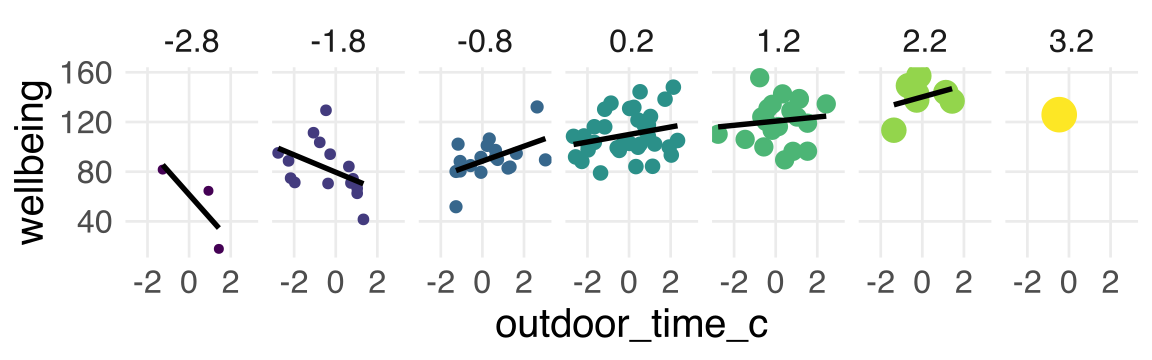
Before and after mean-centering
Before (each panel is one value of hrs_sun):
After (each panel is one value of hrs_sun_c, which aren’t round numbers because the original mean of 3.8 isn’t a round number):
Think–Pair–Share: Mean-centered interactions
The interaction model wellbeing ~ outdoor_time_c * hrs_sun_c will have four coefficients:
Interceptoutdoor_time_chrs_sun_coutdoor_time_c:hrs_sun_c
What will each coefficient represent?
- Think to yourself about each coefficient’s meaning. / Pair up with your neighbour and think together.

- Then share on
wooclap.com, enter codeBIAHTI
Interpreting the mean-centered model (1)
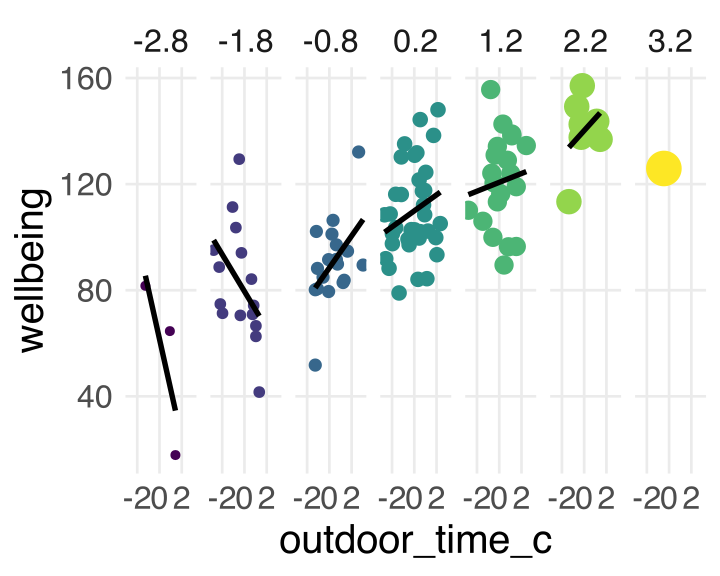
                         Estimate Std. Error t value Pr(>|t|)
(Intercept)                104.85       1.76   59.69     0.00
outdoor_time_c               1.42       1.36    1.04     0.30
hrs_sun_c                   14.45       1.40   10.33     0.00
outdoor_time_c:hrs_sun_c     3.25       1.19    2.73     0.01
Intercept
- When
outdoor_time = 0(mean hrs outdoors) andhrs_sun = 0(mean sunlight hours), the estimated averagewellbeingis 104.9.
outdoor_time_c
- Specifically when
hrs_sun = 0(at the mean value for sunlight hours), spending an additional hour outdoors is associated with an increase in wellbeing of 1.4 points.
hrs_sun_c
- Specifically when
outdoor_time = 0(at the mean number of hours spent outdoors), the sun shining for an extra hour is associated with an increase in wellbeing of 14.5 points.
Interpreting the mean-centered model (2)
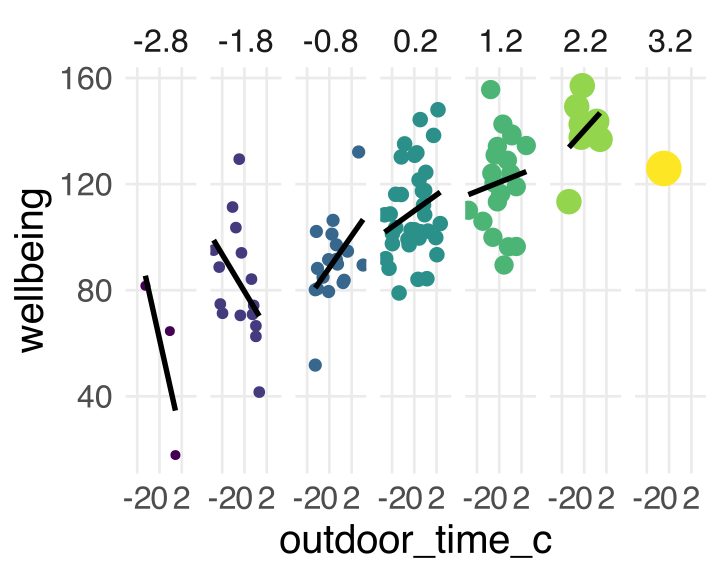
                         Estimate Std. Error t value Pr(>|t|)
(Intercept)                104.85       1.76   59.69     0.00
outdoor_time_c               1.42       1.36    1.04     0.30
hrs_sun_c                   14.45       1.40   10.33     0.00
outdoor_time_c:hrs_sun_c     3.25       1.19    2.73     0.01
outdoor_time_c:hrs_sun_c
Increasing centered sunlight hours by 1 changes the association of
outdoor_time_cwithwellbeingby 3.3.So, the association of
outdoor_time_cwithwellbeingwhen …hrs_sun_c = 0is 1.4hrs_sun_c = 1is 1.4 + 3.3 = 4.7hrs_sun_c = 2is 1.4 + 3.3 + 3.3 = 8.0- …
Equivalently: Increasing centered outdoor time by 1 changes the association of
hrs_sun_cwithwellbeingby 3.3.So, the association of
hrs_sun_cwithwellbeingwhen …out_t_c = 0is 14.5out_t_c = 1is 14.5 + 3.3 = 17.8out_t_c = 2is 14.5 + 3.3 + 3.3 = 21.1- …
Simple slopes
probe_interaction(
  m2,
  pred = outdoor_time_c,
  modx = hrs_sun_c,
  interval = T,
)$interactplot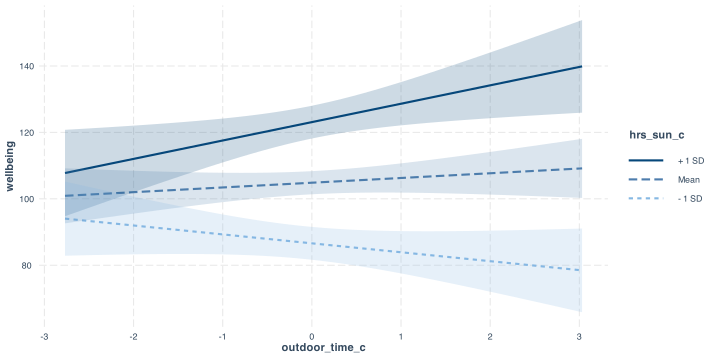
Compare to the old plot of simple slopes: the shape is the same! Mean-centering doesn’t change the relationship between simple slopes.
Region of significance analysis
probe_interaction(
  m2,
  pred = outdoor_time_c,
  modx = hrs_sun_c,
  jnplot = T
)$simslopes$jnplot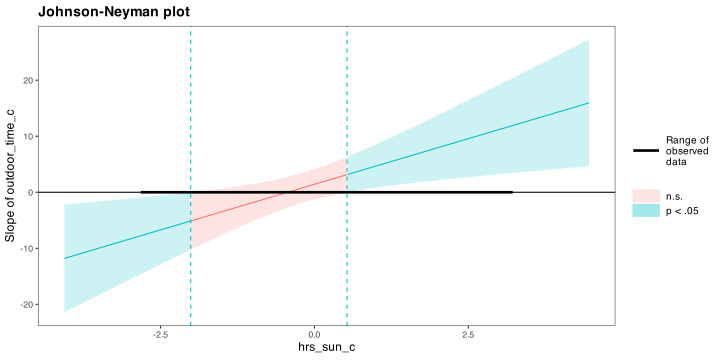
Compare to the old plot: the shape is the same! Mean-centering doesn’t change the regions of (non)significance in how the predictors interact.
Interactions, now with numeric predictors
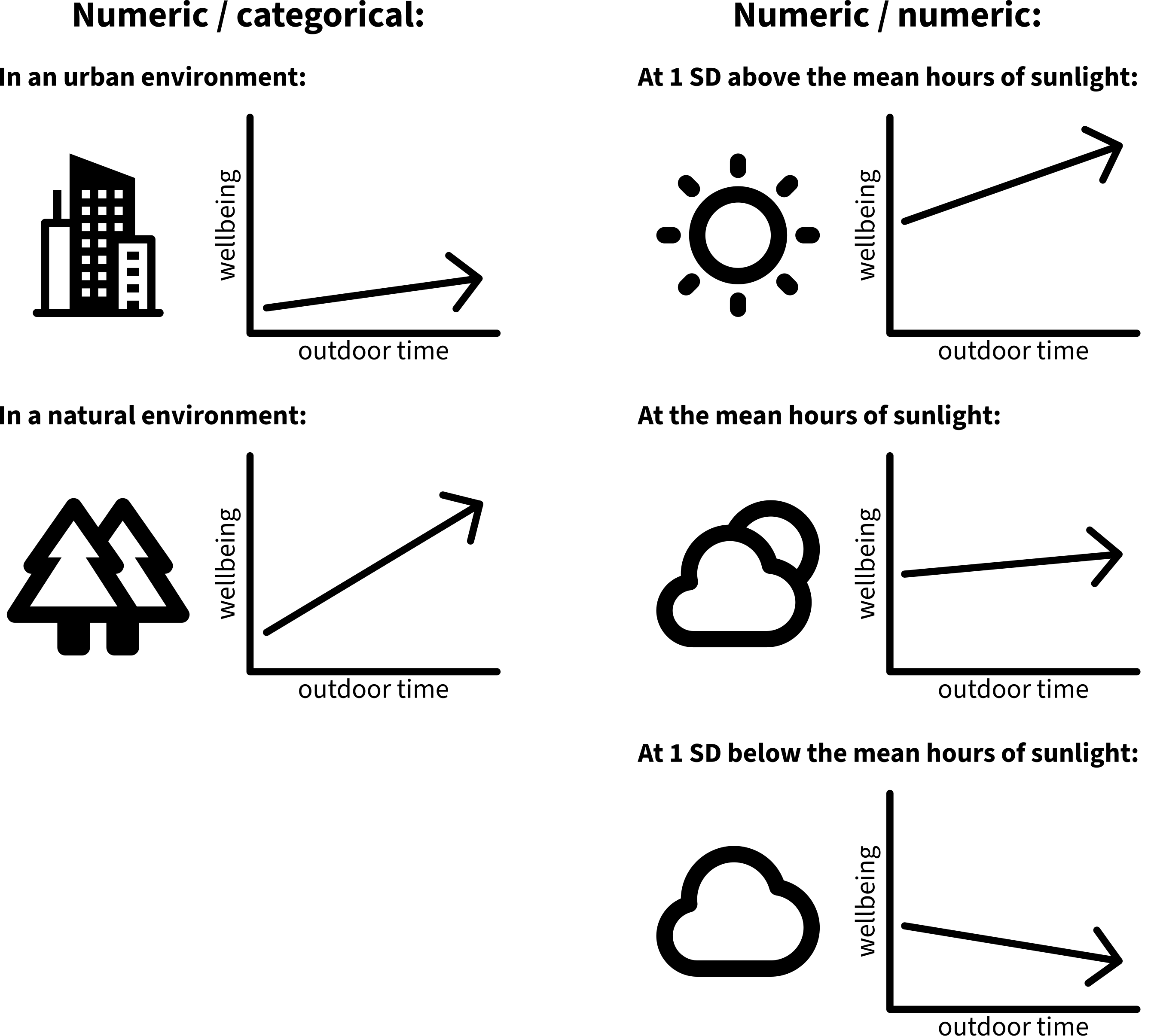
This week
Tasks:

Attend your lab and work together on the exercises
Support:

Help each other on the Piazza forum

Complete the weekly quiz

Attend office hours (see Learn page for details)
Compare the coefficients
The old coefficients in the non-centered model, m1:
(Intercept)
       87.9
outdoor_time
-10.9 hrs_sun
3.2 outdoor_time:hrs_sun
3.3 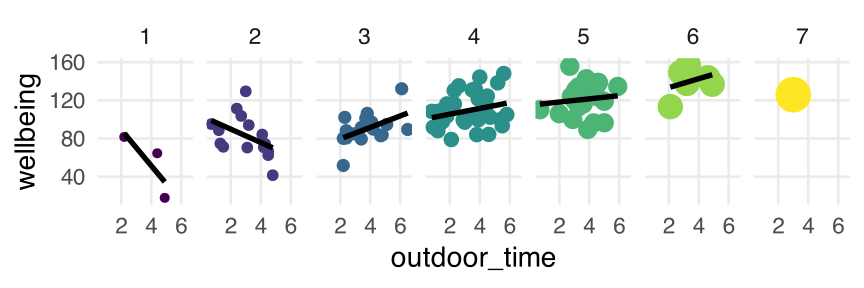
The new coefficients in the mean-centered model, m2:
(Intercept)
      104.8
outdoor_time_c
1.4 hrs_sun_c
14.4 outdoor_time_c:hrs_sun_c
3.3